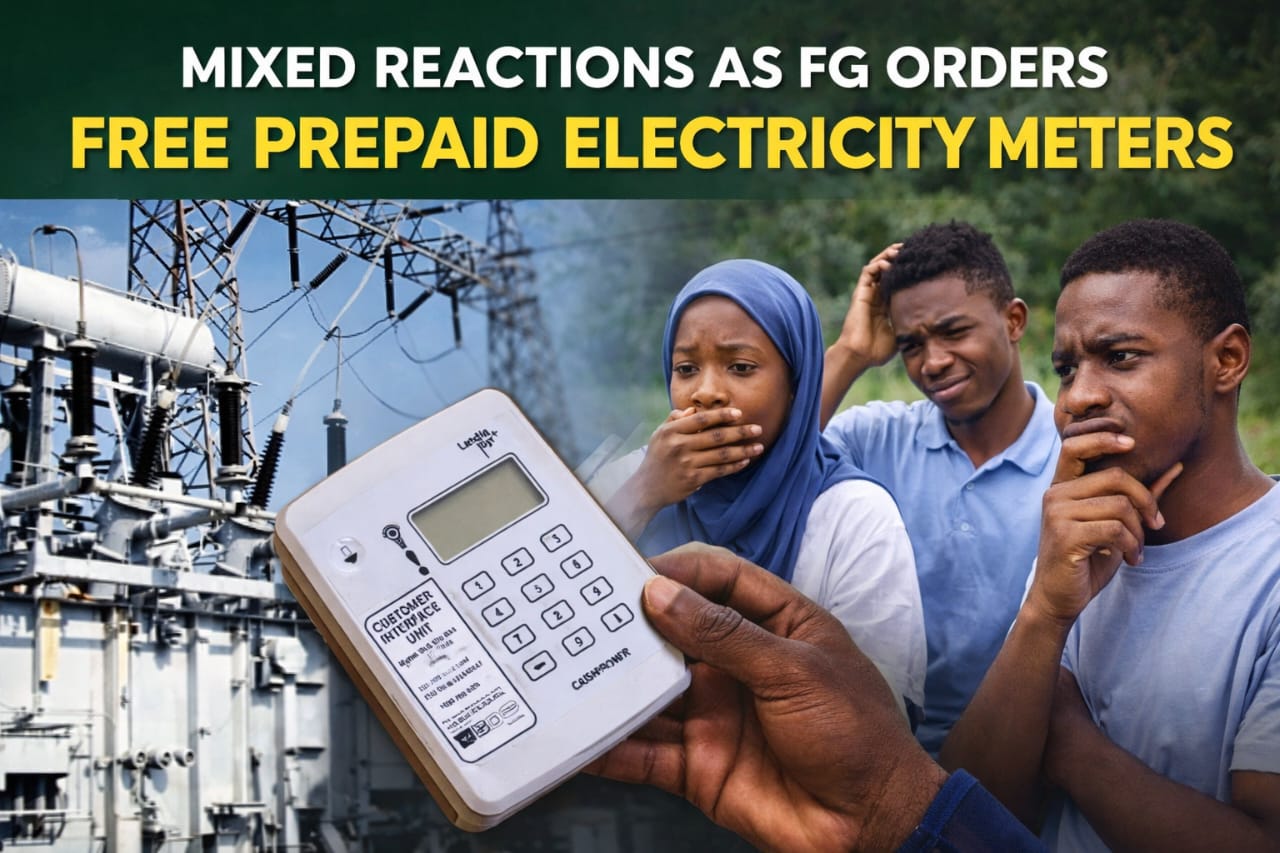
The Federal Government’s directive to provide free prepaid electricity meters to Nigerians has continued to generate mixed reactions across the country, with consumers, experts, and electricity distribution companies (DisCos) expressing varying opinions on the policy.
According to reports, the directive is aimed at protecting electricity consumers from estimated billing and improving transparency in power supply charges. While many Nigerians have welcomed the move as long overdue, others are raising concerns about its implementation and sustainability.
What the Directive Means
Under the new directive, electricity distribution companies are expected to supply prepaid meters to customers without charging them upfront fees. This policy is designed to:
End estimated billing
Improve trust between consumers and DisCos
Ensure fairness in electricity charges
Encourage efficient energy use
For years, estimated billing has been one of the biggest complaints of electricity consumers, especially students, low-income households, and small business owners.
Public Reactions: Support and Skepticism
Many Nigerians have praised the Federal Government for taking action to address unfair billing practices. Several consumers believe that free meters will finally bring accountability to the power sector.
However, some electricity providers and industry experts have expressed concerns that:
DisCos may struggle to fund large-scale meter distribution
Poor infrastructure could delay implementation
There is a risk of corruption or selective distribution
Past policies of similar nature were poorly executed
These concerns have raised questions about whether the directive will be effectively enforced nationwide.
What This Means for Students and Young Nigerians
For students living off-campus and small business operators around campuses, this policy could significantly reduce electricity costs and billing disputes.
Access to prepaid meters allows users to:
Monitor electricity usage
Budget power expenses
Avoid sudden inflated bills
Encourage energy-saving habits
Students and young people, who are often victims of overbilling in rented apartments and hostels, stand to benefit if the policy is properly implemented.
The Bigger Picture: Reforming Nigeria’s Power Sector
The Federal Government’s directive reflects broader efforts to reform Nigeria’s electricity sector by promoting transparency and consumer protection. However, experts stress that policy alone is not enough.
For real impact, the government must:
✔ Ensure proper funding of meter rollout
✔ Monitor DisCos for compliance
✔ Punish violations
✔ Create clear timelines
✔ Educate consumers on how to apply for meters
Without strict monitoring, the policy may face the same challenges that affected previous electricity reforms.
Conclusion
While the directive on free prepaid electricity meters offers hope to millions of Nigerians tired of estimated billing, its success will depend on effective execution. Nigerians are watching closely to see whether this policy will become a true solution or just another unfulfilled promise.
For students and campus communities, this development is worth following closely, as electricity costs directly affect living standards and academic productivity.